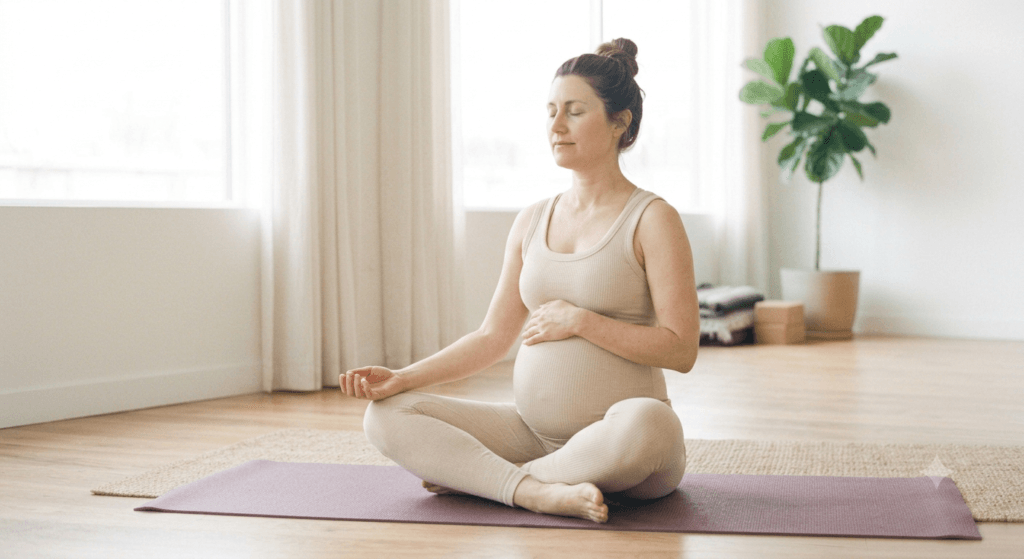
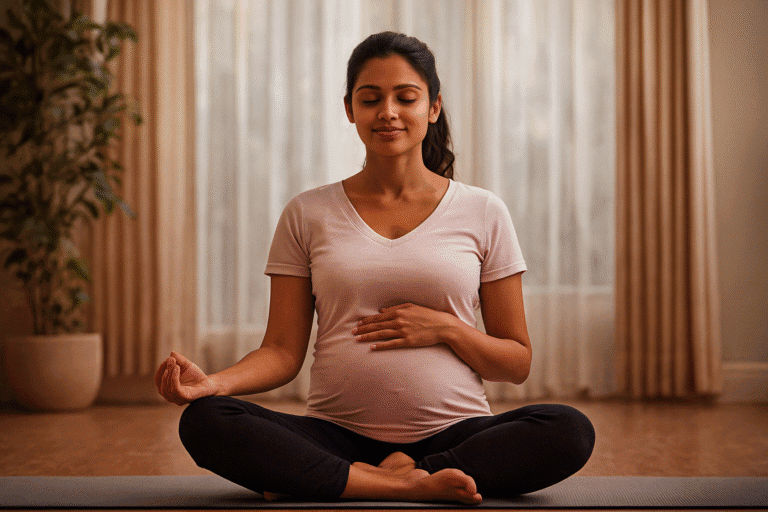
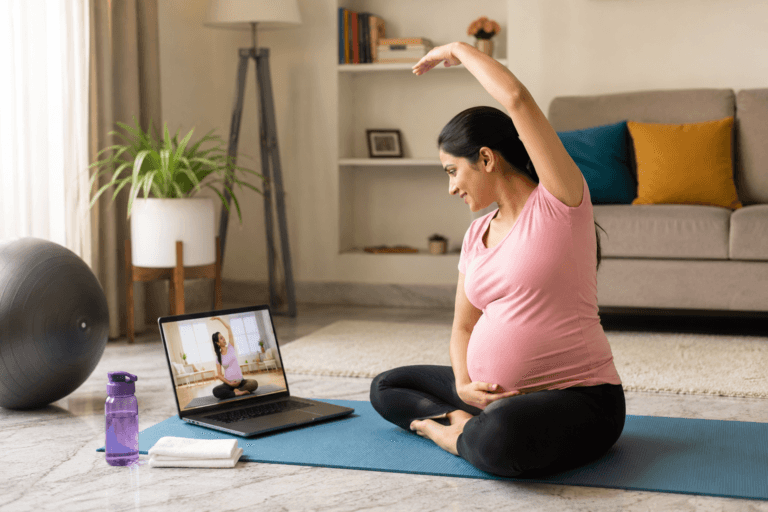
If you’re searching for pregnancy yoga for normal delivery, you’re probably wondering whether yoga can help you prepare for childbirth. It’s a question I hear from many expecting mothers who join my pregnancy yoga classes.
As a doctor and pregnancy yoga trainer, my answer is always honest. Every pregnancy is unique, and the mode of delivery depends on several medical factors. However, when practised safely under proper guidance, pregnancy yoga can help prepare your body and mind for labour by improving posture, encouraging gentle movement, teaching breathing techniques, and promoting relaxation throughout pregnancy. Rather than determining the mode of delivery, pregnancy yoga supports healthy preparation for childbirth.
Over the years, I have guided many expecting mothers through different stages of pregnancy. That’s why I never recommend the same approach for everyone. Every session is thoughtfully adapted to the stage of pregnancy, the mother’s comfort, and her obstetrician’s recommendations.
Pregnancy yoga is not about performing difficult poses or pushing your body beyond its limits. It’s about moving safely, breathing mindfully, understanding your changing body, and building confidence for the journey ahead.
In this guide, I’ll explain how pregnancy yoga may support labour preparation, the benefits you can expect, safe practices commonly recommended during pregnancy, common mistakes to avoid, and important precautions to keep in mind.
💜 Dr. Shital’s Advice
Pregnancy yoga supports a healthy pregnancy by encouraging safe movement, mindful breathing, and relaxation. The goal is not to guarantee a particular type of delivery, but to help you feel stronger, calmer, and more confident throughout your pregnancy.
Medical Disclaimer: This article is intended for educational purposes only and should not replace personalised medical advice. Begin pregnancy yoga only after discussing it with your obstetrician or healthcare provider.
What Does “Normal Delivery” Really Mean?
A normal (vaginal) delivery is the natural process of giving birth through the birth canal without a planned caesarean section (C-section). When it is safe for both the mother and the baby, vaginal birth is generally the preferred mode of delivery because it is a natural physiological process.
One message I always share with the mothers in my pregnancy yoga classes is this:
The ultimate goal is not just a normal delivery—it is a healthy mother and a healthy baby.
It is natural to hope for a vaginal birth, and many expecting mothers work towards maintaining a healthy pregnancy. However, every pregnancy is unique, and the mode of delivery is influenced by several factors that are carefully assessed by your obstetrician throughout pregnancy and labour.
These factors may include:
Your overall health during pregnancy
Your baby’s position before and during labour
The progress of labour
Your obstetrician’s clinical assessment
Any pregnancy-related medical conditions
Sometimes, despite taking excellent care of yourself, a cesarean section may become the safest option for the well-being of both mother and baby. If that happens, it is not a failure—it is simply the most appropriate medical decision for that particular pregnancy.
Rather than worrying about the final mode of delivery, I encourage mothers to focus on the things they can influence every day. Attending regular antenatal check-ups, eating a balanced diet, staying physically active with your doctor’s approval, managing stress, getting adequate rest, and practising pregnancy yoga safely can all contribute to a healthier pregnancy and help you feel more confident as you prepare for childbirth.
💜 Dr. Shital’s Tip
A healthy mother and a healthy baby will always be more important than the mode of delivery. Pregnancy yoga helps prepare your body and mind for childbirth, while your obstetrician recommends the safest mode of delivery based on your individual pregnancy and your baby’s well-being.
How Pregnancy Yoga for Normal Delivery Helps Prepare You for Labour
One of the first questions many expecting mothers ask me is:
“Doctor, can pregnancy yoga really help with a normal delivery?”
My answer is always simple and honest.
Pregnancy yoga for normal delivery can play an important role in preparing your body and mind for childbirth. However, the mode of delivery is influenced by several medical and obstetric factors that vary from one pregnancy to another.
These factors include your baby’s position, the progress of labour, your overall health, and your obstetrician’s clinical assessment throughout pregnancy and childbirth.
While these factors are beyond our control, there are many healthy habits that can help prepare your body and mind for childbirth. When practised safely under expert guidance, pregnancy yoga is one of those healthy habits.
Regular pregnancy yoga can support your physical comfort, breathing awareness, posture, emotional well-being, and overall confidence throughout pregnancy.
In my pregnancy yoga classes, I often tell mothers that labour isn’t something your body suddenly learns on the due date. Preparation begins much earlier through gentle movement, mindful breathing, adequate rest, healthy daily habits, and a positive mindset.
I see pregnancy yoga as one part of a healthy pregnancy journey. When combined with regular antenatal care, balanced nutrition, adequate rest, and your obstetrician’s guidance, it can help support both physical and emotional preparation for childbirth.
How Your Body Changes During Pregnancy—and How Yoga Can Help
As your pregnancy progresses, your body goes through remarkable changes. As your baby grows, your posture changes, your centre of gravity shifts, and your muscles and joints work harder to support the extra weight. These natural changes can sometimes make everyday activities feel more challenging than before.
Many expecting mothers experience one or more of the following changes during pregnancy:
Lower back pain
Hip discomfort
Neck and shoulder stiffness
Leg cramps
Swelling in the feet
Fatigue
Difficulty sleeping
When mothers come to me with these concerns, I reassure them that many of these discomforts are a normal part of pregnancy. The goal of pregnancy yoga isn’t to eliminate every ache or pain—it is to help your body adapt to these changes through gentle movement, better posture, mindful breathing, and relaxation.
Some mothers join my classes because of back pain, while others simply want to stay active throughout pregnancy. Others are looking for safe ways to prepare themselves physically and mentally for childbirth. Whatever their reason for joining, my first goal is always to help them feel safe, comfortable, and confident—not to perform difficult yoga poses.
Pregnancy Yoga for Normal Delivery Is Much More Than Stretching
One of the biggest misconceptions I hear from expecting mothers is that pregnancy yoga is simply about stretching.
During our sessions, every movement has a purpose. We don’t perform exercises simply because they are popular. Each practice is selected to support the changing needs of pregnancy—whether that’s improving posture, encouraging gentle mobility, practising breathing techniques, or helping mothers relax and become more aware of their bodies.
If you’d like to explore the evidence behind these practices, you can also read our detailed guide on the benefits of prenatal yoga, where I explain how regular practice may support posture, breathing, relaxation, sleep, and overall pregnancy well-being.
Every class is adapted according to the trimester and the mother’s comfort. Some days we focus more on mobility, while on other days we spend additional time on breathing or relaxation. Pregnancy yoga is never about pushing yourself—it is about supporting your body safely throughout pregnancy.
What Mothers Often Tell Me After a Few Weeks of Pregnancy Yoga
While every pregnancy is unique, many mothers who attend my pregnancy yoga classes regularly tell me they begin noticing small but meaningful changes over time.
They often say they:
✔️ Feel more comfortable during everyday activities.
✔️ Notice less stiffness in the back and hips.
✔️ Become more aware of their posture and movement.
✔️ Feel calmer through mindful breathing.
✔️ Sleep better and feel more relaxed.
✔️ Feel more confident as they prepare for childbirth.
These experiences vary from one mother to another, but they highlight how pregnancy yoga supports overall physical and emotional well-being. The goal isn’t to promise a particular type of delivery—it’s to help mothers feel healthier, calmer, and more confident throughout pregnancy.
Why Every Pregnancy Yoga Class Should Be Different
One question I often hear is,
“Doctor, can’t I just follow the same pregnancy yoga routine every day?”
The answer is usually no.
Pregnancy is a constantly changing journey. Your body in the first trimester is very different from your body in the third trimester. Even two mothers at the same stage of pregnancy may have completely different needs, comfort levels, and medical advice.
This is why I don’t believe in a “one-size-fits-all” approach to pregnancy yoga.
Before recommending any exercise, I always consider factors such as:
Which trimester you are in
Whether this is your first pregnancy or a subsequent one
Your current fitness level
Any discomfort, such as back pain or pelvic pain
Your obstetrician’s advice and any pregnancy-related precautions
Some mothers need more gentle movement and relaxation, while others may be comfortable practising a wider range of prenatal exercises. The goal is never to make every mother perform the same routine. The goal is to help every mother practise safely and confidently.
I also encourage mothers to listen to their bodies every day. Pregnancy is not always predictable. Some days you may feel energetic, while on other days you may need more rest. It is perfectly acceptable to modify an exercise or even skip it if you are not feeling well.
Pregnancy yoga is not about doing more—it is about doing what is appropriate for you and your baby on that particular day.
What Can You Expect in a Pregnancy Yoga Class?
Many mothers join their first pregnancy yoga class with one common concern:
“Doctor, will I be able to do the exercises?”
I always reassure them that pregnancy yoga is very different from a regular yoga class. You don’t need to be flexible, physically fit, or have previous yoga experience to begin. Every class is adapted to your trimester, comfort level, and individual needs.
A typical pregnancy yoga class is carefully structured to help you feel comfortable, confident, and well-supported throughout your pregnancy. While the exact routine may vary depending on the trimester and individual needs, each session usually includes the following components.
Gentle Joint Mobility Exercises
We begin with simple movements for the neck, shoulders, wrists, hips, knees, and ankles. These exercises help reduce stiffness, improve circulation, and prepare the body for the rest of the session.
Many mothers who spend long hours sitting at a desk or managing household responsibilities find these gentle movements particularly refreshing.
Posture Awareness
As your baby grows, your centre of gravity changes, which can affect the way you stand, sit, and walk.
During our sessions, I help mothers become more aware of their posture and everyday movements. Small improvements in posture can often reduce unnecessary strain on the back, shoulders, and hips.
Safe Stretching
Pregnancy yoga is not about becoming more flexible.
In fact, pregnancy hormones naturally make your joints and ligaments more flexible. This is why our stretches are always gentle, controlled, and comfortable. The goal is to maintain healthy movement—not to push your body beyond its limits.
Pelvic Mobility
Gentle pelvic movements help mothers become more aware of how their bodies move during pregnancy.
Rather than forcing any position, we focus on smooth, comfortable movement that supports body awareness and prepares the body for the natural changes that occur throughout pregnancy.
Breathing Techniques
Breathing is an important part of every class—not just the relaxation at the end.
I encourage mothers to breathe naturally throughout each movement. Learning to slow down and coordinate movement with breathing helps promote relaxation and greater awareness of the body.
Relaxation and Mindfulness
Every pregnancy yoga class ends with a period of guided relaxation.
Many mothers tell me this becomes their favourite part of the session because it gives them time to slow down, release tension, and simply connect with themselves and their growing baby.
Pregnancy yoga is about learning to move safely, breathe comfortably, and preparing both body and mind for the journey of pregnancy and childbirth.
Pregnancy Yoga vs Regular Yoga
Pregnancy Yoga
Regular Yoga
Gentle movements
Advanced postures may be included
Trimester-specific modifications
Not designed for pregnancy
Focus on breathing and relaxation
General fitness and flexibility
Doctor’s approval recommended
Not pregnancy-specific
Designed for expecting mothers
Designed for the general population
Focus on comfort, safety, and preparation for childbirth
Focus on general fitness, flexibility, and strength
Safe Pregnancy Yoga Practices I Commonly Recommend
Many mothers ask me,
“Doctor, which yoga poses should I practise for a normal delivery?”
My answer is always the same.
No single yoga posture determines how your baby will be born. Instead, pregnancy yoga supports healthy preparation for childbirth through gentle movement, breathing techniques, posture awareness, relaxation, and consistent practice. In my experience, it is the combination of these practices over time—not any single yoga pose—that helps mothers prepare physically and emotionally for childbirth.
Each practice that I recommend has a specific purpose, and it is always adapted according to the mother’s stage of pregnancy, comfort level, and medical advice.
These are some of the gentle practices I commonly include in pregnancy yoga for normal delivery, always adapting them to the mother’s trimester, comfort, and medical guidance.
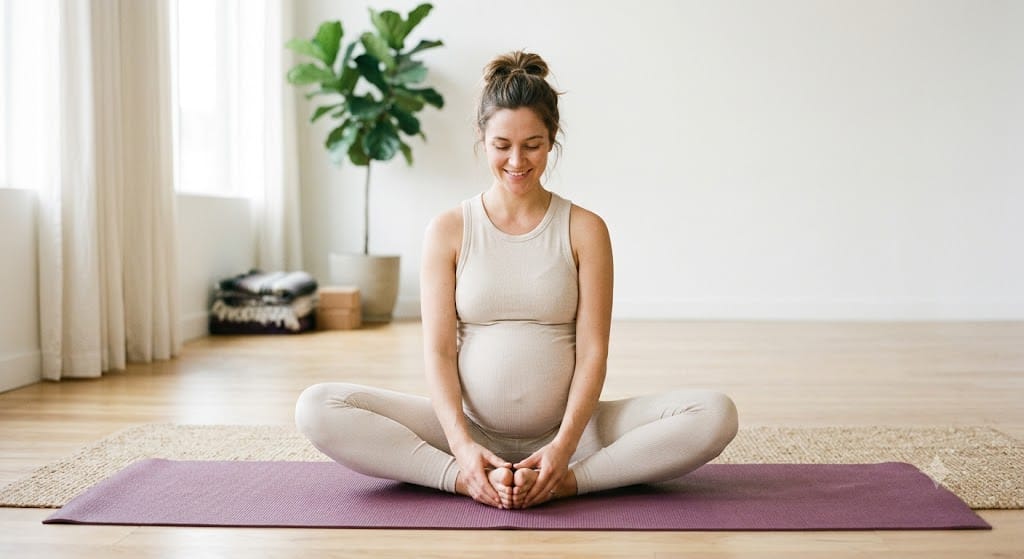
Butterfly Pose (Baddha Konasana): Gentle Hip Mobility
The Butterfly Pose is one of the most commonly practised prenatal yoga postures, but it should always be performed gently and without forcing the stretch.
I often include this posture because it encourages comfortable movement around the hips and inner thighs while helping mothers sit with better posture during breathing exercises and relaxation.
Rather than trying to bring the knees close to the floor, I encourage mothers to focus on relaxed breathing, gentle movement, and staying within a comfortable range of motion. Pregnancy yoga should never involve forcing a stretch or causing discomfort.
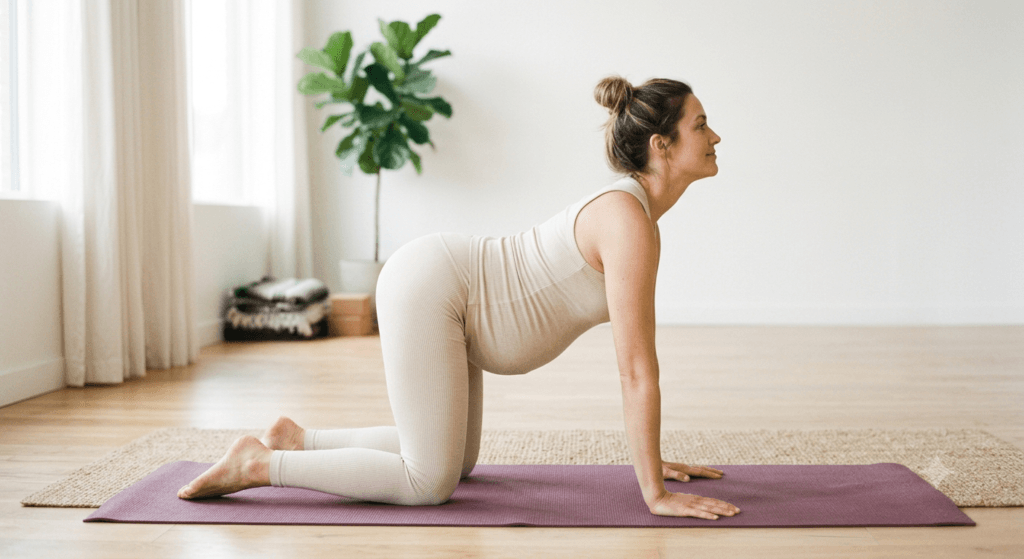
Cat-Cow Movement: Supporting a Healthy Spine
Back discomfort is one of the most common concerns during pregnancy.
The gentle Cat-Cow movement encourages spinal mobility and helps mothers coordinate movement with breathing. Many women tell me they feel less stiffness in their back and shoulders after practising this movement regularly.
The movement should always remain slow, comfortable, and pain-free.
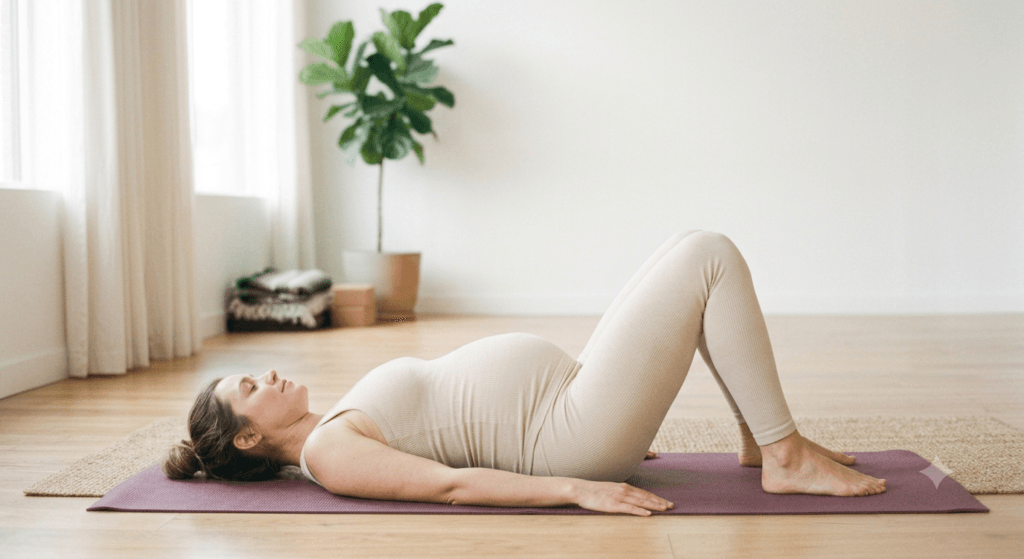
Pelvic Tilts: Supporting Healthy Pelvic Movement
Pelvic tilts are simple movements that help mothers become more aware of their posture and pelvic movement.
They are especially helpful for women who spend long hours sitting or standing, as they encourage gentle movement in the lower back and pelvis.
Rather than rushing through the exercise, I encourage slow and mindful movement coordinated with comfortable breathing.
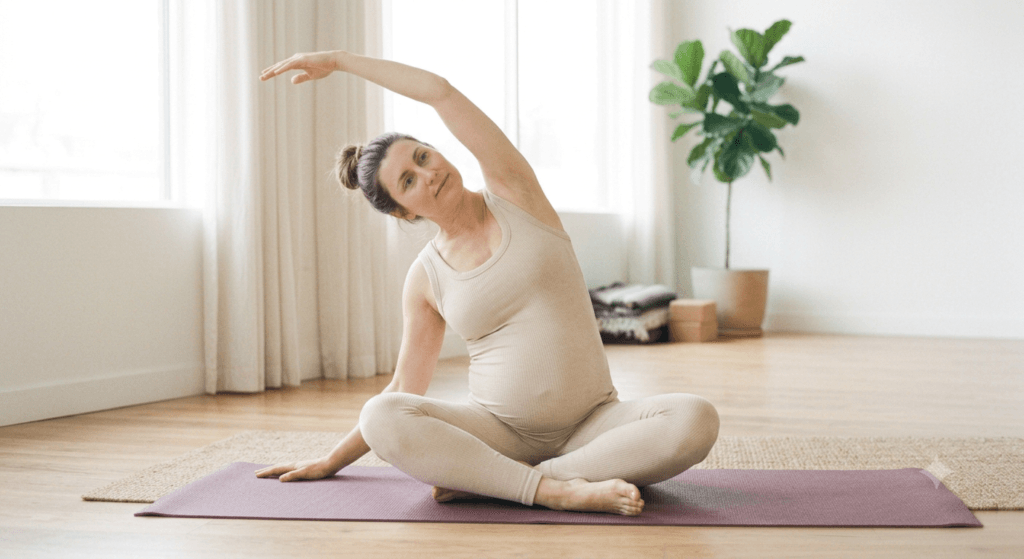
Gentle Side Stretching
As pregnancy progresses, many mothers notice tightness around the sides of the waist and rib cage.
Gentle side stretches create more space for comfortable breathing and help reduce stiffness without placing unnecessary strain on the body.
These movements should always feel pleasant and never painful.
Breathing Practice: Preparing Body and Mind
If there is one skill, I hope every expecting mother develops during pregnancy, it is learning how to breathe comfortably.
Breathing is part of every session—not just the relaxation at the end.
Practising slow, controlled breathing helps mothers become more aware of their bodies and promotes a sense of calm throughout pregnancy.
Common Mistakes I See Expecting Mothers Make During Pregnancy Yoga
Over the years, I have realised that most problems during pregnancy yoga do not happen because mothers are unwilling to exercise—they usually happen because of misinformation or trying to do too much.
Many expecting mothers come to me after watching online videos or following advice from friends and family. While these suggestions are often well-intentioned, every pregnancy is different. What feels comfortable or safe for one mother may not be suitable for another.
Here are some of the common mistakes I encourage mothers to avoid.
Trying to Push Beyond Your Comfort Level
Some mothers believe that stretching further or exercising for a longer time will better prepare them for labour.
In reality, pregnancy yoga is not about achieving difficult poses or testing your flexibility. The goal is to move comfortably, maintain mobility, and support your changing body. If a movement causes pain or discomfort, it should be stopped and discussed with your instructor or healthcare provider.
Holding Your Breath During Practice
Many people unknowingly hold their breath while concentrating on an exercise.
In my classes, I gently remind mothers that breathing is just as important as the movement itself. Slow, relaxed breathing helps reduce unnecessary tension and allows the body to move more comfortably.
Comparing Yourself with Other Mothers
Every pregnancy is unique.
Some women have been practising yoga for years, while others are exercising for the first time. Comparing your flexibility, strength, or progress with someone else can create unnecessary pressure.
I always encourage mothers to focus on their own journey rather than trying to match someone else’s practice.
Following Random Pregnancy Yoga Videos Online
The internet offers thousands of pregnancy yoga videos, but not all of them are created by professionals trained in prenatal care. If you prefer structured guidance, our live online pregnancy yoga classes provide pregnancy-specific instruction with real-time guidance and modifications.
If you choose to practise at home, make sure the sessions are specifically designed for pregnancy and guided by a qualified prenatal yoga instructor. Exercises should always be appropriate for your trimester and any advice given by your obstetrician.
Ignoring Pain or Warning Signs
Pregnancy yoga should never be painful.
If you experience pain, dizziness, vaginal bleeding, leaking of fluid, regular contractions, or any symptom that concerns you, stop exercising and contact your obstetrician immediately. Your safety and your baby’s well-being always come first.
Thinking Relaxation Is Optional
Many mothers are surprised when they realise how relaxed they feel at the end of a pregnancy yoga class.
Relaxation is not simply the final few minutes of the session—it is an important part of the practice. Taking time to relax the body and calm the mind can help reduce stress and leave you feeling refreshed rather than exhausted.
My Advice to Every Expecting Mother
Pregnancy yoga is not a competition, and there is no such thing as a “perfect” yoga pose during pregnancy.
Listen to your body, practise regularly, and never hesitate to modify an exercise if needed. Safe and consistent practice will always be more beneficial than trying to do too much too soon.
When Should Pregnancy Yoga Be Avoided or Modified?
One question I encourage every expecting mother to ask before starting pregnancy yoga is:
“Is it safe for me to practise yoga during my pregnancy?”
For most women with a healthy pregnancy, prenatal yoga can be a safe and beneficial form of physical activity when practised under proper guidance. However, there are situations where yoga may need to be postponed, modified, or avoided until your obstetrician advises that it is safe.
I always recommend discussing any exercise programme with your obstetrician, especially if you have a high-risk pregnancy or any medical concerns.
Pregnancy yoga may need to be modified or temporarily avoided if you have:
Vaginal bleeding during pregnancy
Leaking of amniotic fluid
Signs of preterm labour or regular contractions
Placenta previa or other placental concerns
Pregnancy-induced high blood pressure or preeclampsia
Severe dizziness or fainting episodes
Significant pain during movement
Any medical condition where your obstetrician has advised limiting physical activity
Even in healthy pregnancies, certain yoga postures may need to be adapted as your pregnancy progresses. For example, movements that feel comfortable during the second trimester may require modification in the third trimester because of changes in balance, posture, and the growing baby.
This is why I assess each mother individually rather than following the same routine for everyone.
Listen to Your Body
One of the most valuable lessons pregnancy yoga teaches is to listen to your body.
If an exercise causes pain, dizziness, shortness of breath, or simply doesn’t feel right, stop immediately. Pregnancy is not the time to ignore warning signs or push through discomfort.
There is no benefit in forcing your body to do more than it is ready for.
Yoga Supports Your Pregnancy—It Doesn’t Replace Medical Care
I always remind mothers that pregnancy yoga is meant to complement the care you receive from your obstetrician, not replace it.
Pregnancy yoga works best as part of your overall antenatal care — not as a replacement for it. If you’re looking for a broader understanding of prenatal health, nutrition, emotional well-being, Garbh Sanskar, and postnatal recovery, I recommend reading my complete guide to maternity care during pregnancy.
When Can You Start Pregnancy Yoga?
Another question I frequently hear is:
“Doctor, when is the right time to start pregnancy yoga?”
The answer depends on your stage of pregnancy, your overall health, and your obstetrician’s advice — and rather than asking which trimester has the best exercises, I encourage mothers to ask what is the safest practice for them right now.
First Trimester
During the first trimester, every pregnancy is different. Some women feel energetic, while others experience nausea, fatigue, or increased tiredness.
If you are planning to begin pregnancy yoga during this stage, start only if your healthcare provider considers it appropriate for your pregnancy. For many women, this trimester is a time to focus on rest, gentle movement, and allowing the body to adjust to pregnancy.
Second Trimester
Many mothers find the second trimester to be the most comfortable time to practise pregnancy yoga.
This is often when energy levels improve, making it easier to focus on posture, breathing, mobility, and gentle strengthening exercises. Every practice should still be adapted to your comfort and guided according to your individual pregnancy needs.
Third Trimester
As your due date approaches, your yoga practice naturally changes.
During this stage, we usually place greater emphasis on comfortable movement, breathing techniques, relaxation, and maintaining mobility rather than increasing physical activity.
The goal is to help mothers feel comfortable, confident, and physically prepared for the final weeks of pregnancy.
Continue Your Pregnancy Wellness Journey
Every stage of motherhood brings unique physical and emotional changes. Many mothers also combine pregnancy yoga with Garbh Sanskar practices to encourage relaxation, mindfulness, positive affirmations, and a deeper emotional connection with their growing baby. Whether you’re planning a pregnancy, expecting a baby, practising Garbh Sanskar, or recovering after childbirth, doctor-guided support can help you feel more confident and cared for throughout your journey.
Explore our doctor-guided pregnancy wellness programs designed to support you at every stage of your motherhood journey:
If you’re considering pregnancy yoga for normal delivery, remember that the goal is to prepare your body and mind for childbirth while supporting a healthy pregnancy under expert guidance.
Frequently Asked Questions
1. Can pregnancy yoga guarantee a normal delivery?
No. Pregnancy yoga cannot guarantee a normal (vaginal) delivery. The mode of delivery depends on many factors, including your baby’s position, your health, the progress of labour, and your obstetrician’s assessment. Pregnancy yoga supports your overall physical and emotional well-being and helps prepare your body and mind for childbirth.
2. When is the best time to start pregnancy yoga?
The right time varies for every woman. Always consult your obstetrician before starting. Many women begin regular pregnancy yoga during the second trimester, but the timing depends on your individual pregnancy and medical advice.
3. Is pregnancy yoga safe for beginners?
Yes. Pregnancy yoga is suitable for beginners when it is designed specifically for pregnancy and guided by a qualified prenatal yoga instructor. You do not need any previous yoga experience.
4. Can I practise pregnancy yoga every day?
Gentle pregnancy yoga can often be practised regularly if your obstetrician has advised that exercise is appropriate for you. The duration and intensity should always match your stage of pregnancy and your comfort level.
5. Which yoga pose is best for normal delivery?
There is no single yoga pose that guarantees a normal delivery. Pregnancy yoga works through a combination of gentle movement, posture awareness, breathing techniques, relaxation, and regular practice rather than one specific posture.
6. Can pregnancy yoga help reduce back pain?
Many expecting mothers experience back discomfort during pregnancy because of changes in posture and body weight. Gentle pregnancy yoga may help improve posture, mobility, and overall comfort during pregnancy when practised safely.
7. Is online pregnancy yoga as effective as attending a class?
Online pregnancy yoga can be an excellent option when classes are conducted live by an experienced prenatal yoga instructor who can provide guidance and modifications. Many mothers appreciate the convenience of practising safely from home.
8. Should I stop pregnancy yoga if I feel discomfort?
Yes. Pregnancy yoga should never be painful. If you experience pain, dizziness, vaginal bleeding, leaking of fluid, regular contractions, or any unusual symptoms, stop exercising immediately and contact your obstetrician.
9. Can I continue practising yoga if I was already doing yoga before pregnancy?
In many cases, yes—but your practice will usually need to be modified. Pregnancy changes your balance, flexibility, and physical needs, so exercises that were appropriate before pregnancy may not be suitable afterwards. Always follow guidance that is appropriate for pregnancy.
10. Do I need my doctor’s approval before joining pregnancy yoga?
Yes. Even if you feel healthy, it is always advisable to discuss any exercise programme with your obstetrician. They can advise whether pregnancy yoga is appropriate for your individual pregnancy and any precautions you should follow.
A Note from Dr. Shital
If you remember just one message from this article, let it be this:
Don’t put unnecessary pressure on yourself by focusing only on the type of delivery. Instead, focus on having the healthiest pregnancy possible. When you care for your body, follow your obstetrician’s advice, and prepare yourself physically and emotionally, you are giving both yourself and your baby the best possible start.
Every pregnancy is unique, and every mother’s journey is different. Some women have a smooth vaginal birth, while others may need medical assistance or a cesarean section to ensure the safety of both mother and baby.
Neither journey is a success nor a failure.
What truly matters is that you receive the right care, make informed decisions, and welcome your baby in the safest possible way.
Throughout pregnancy, be kind to yourself. Nourish your body with healthy food, attend your regular antenatal check-ups, stay active with your doctor’s advice, practise pregnancy yoga safely, and make time to rest and relax.
As a doctor and pregnancy yoga trainer, it has been my privilege to support many expecting mothers through this beautiful journey. One of the greatest joys of my work is seeing women grow in confidence as they learn to trust their bodies and prepare for childbirth.
Remember, pregnancy yoga is about caring for yourself and your baby—one gentle breath, one mindful movement, and one day at a time.
Looking for Doctor-Guided Pregnancy Yoga for Normal Delivery?
If you’re looking for safe, doctor-guided pregnancy yoga, I’d be happy to support you throughout this special journey. Every pregnancy is unique, and my classes are tailored to your stage of pregnancy, helping you move safely, breathe comfortably, and prepare both your body and mind for childbirth with confidence.
Many mothers begin exploring pregnancy yoga for normal delivery because they want to prepare themselves physically and emotionally for childbirth. My advice is always to focus first on a healthy pregnancy while allowing your obstetrician to guide the safest approach to delivery.
I look forward to supporting you with safe pregnancy yoga, practical guidance, and compassionate care throughout your pregnancy journey.
About Dr. Shital Bankar
I’m Dr. Shital Bankar (BHMS, MD Homeopathy), a doctor, pregnancy yoga trainer, and Garbh Sanskar educator based in Pune. Over the past several years, I’ve had the privilege of guiding hundreds of expecting mothers through doctor-guided pregnancy yoga, prenatal wellness, and holistic maternity care. My approach combines evidence-informed pregnancy care, safe prenatal yoga practices, breathing techniques, Garbh Sanskar, and practical lifestyle guidance to support the physical, emotional, and mental well-being of both mother and baby.
Garbh Sanskar — the ancient Indian way of nurturing a baby’s emotional, mental, and spiritual growth — is a mindful daily practice.Even simple habits like meditation, music, prayer, and positive thoughts can help your baby grow with peace and positivity The good news? You can easily practice Garbh Sanskar at home every day — with…
Prenatal yoga benefits can include improved physical comfort, greater confidence, emotional wellbeing, and better preparation for childbirth. As a doctor with years of experience guiding live pregnancy yoga and Garbh Sanskar sessions for expecting mothers across India, I have seen how the right prenatal yoga practice can support these aspects of pregnancy. Many expecting mothers…
Discover why more expecting mothers are choosing doctor-guided online pregnancy yoga classes for safe, flexible, and supportive prenatal wellness from home.
Maternity Care During Pregnancy: A Personal & Holistic Approach to Motherhood Maternity care during pregnancy plays a vital role in ensuring the physical, emotional, and mental well-being of both mother and baby. Welcome to The Complete Holistic Maternity Care Guide — your trusted resource for a healthy, confident, and fulfilling pregnancy. Whether you’re an expecting…
Is online pregnancy yoga safe? Over the years, while guiding live online pregnancy yoga classes for expecting mothers across India, this has been one of the questions I hear most often. One question I hear almost every week from expecting mothers is: “Doctor, is online pregnancy yoga really safe?” It’s a genuine concern. After all,…