
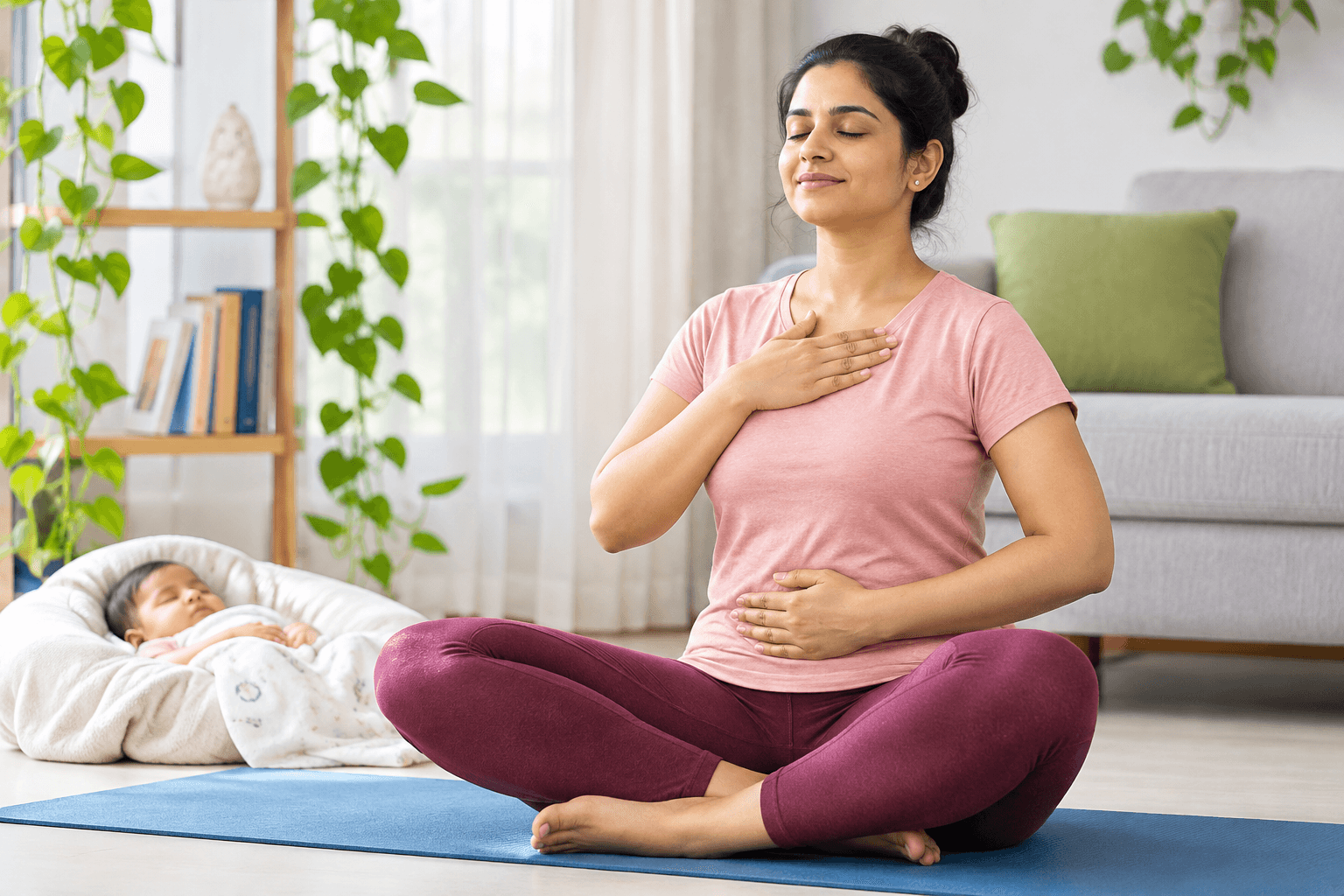
When Can You Start Postnatal Yoga After Delivery?
When to start postnatal yoga after delivery is one of the most common questions new mothers have as they begin their recovery. Becoming a mother brings many physical and emotional changes. After childbirth, you may feel eager to regain your strength, improve your posture, reduce stiffness and begin moving comfortably again. You may also wonder: When can I start postnatal yoga after delivery?
The answer depends on your recovery, the type of delivery, any complications you experienced and your healthcare provider’s advice.
Some mothers may be able to begin gentle movement soon after an uncomplicated vaginal birth. Others, particularly those recovering from a C-section, significant tearing or other complications, may need a more gradual approach.
The important thing is not to rush. Postnatal yoga should support your recovery, respect your body’s healing process and progress at a pace that feels appropriate for you.
Why Is Postnatal Recovery Important Before Starting Yoga?
Pregnancy and childbirth place considerable demands on the body. After delivery, your body needs time to recover and adjust to its new needs.
Some changes you may experience include:
- Abdominal changes: Your abdominal muscles and surrounding tissues need time to recover after pregnancy.
- Pelvic floor changes: Pregnancy and childbirth can affect the muscles that support the bladder, uterus and bowel.
- Postural discomfort: Feeding, carrying and caring for your baby may contribute to neck, shoulder and back discomfort.
- Fatigue: Interrupted sleep and the demands of newborn care can affect your energy levels.
- Emotional adjustments: The transition to motherhood can bring a range of emotions and changes in routine.
Postnatal recovery is not simply about returning to your pre-pregnancy body. It is about rebuilding comfort, strength, mobility and confidence gradually.
When to Start Postnatal Yoga After Delivery: What About Vaginal Birth?
If you are considering postnatal yoga after normal delivery, gentle physical activity may be possible soon after childbirth, as soon as you feel ready and your healthcare provider has no concerns.
However, gentle movement is different from starting a full postnatal yoga class.
In the early recovery period, your healthcare provider may recommend suitable activities such as:
- Short, gentle walks.
- Comfortable breathing and relaxation.
- Gentle movements that do not cause pain or strain.
- Pelvic floor exercises, when appropriate and performed correctly.
A structured postnatal yoga program should be introduced according to your recovery and individual readiness.
Avoid comparing your progress with another mother’s experience. Even after similar deliveries, recovery can be different.
ACOG’s guidance on exercise after pregnancy
When Can You Start Postnatal Yoga After a C-Section?
If you are considering postnatal yoga after C-section, remember that a C-section is major abdominal surgery. Your body needs time to recover from both childbirth and the surgical procedure.
The timing of your return to postnatal yoga will depend on factors such as:
- How your incision is healing.
- Whether you experienced any surgical or post-delivery complications.
- Your pain and comfort levels.
- Your ability to perform everyday movements comfortably.
- Your obstetrician’s or treating healthcare provider’s advice.
During recovery, avoid independently attempting demanding abdominal exercises, deep twists, strong backbends or movements that place pressure on your incision.
Once your healthcare provider considers it appropriate, you can discuss a gradual return to suitable movement.
A postnatal yoga program should be modified for your recovery stage. Do not assume that an exercise suitable for someone after a vaginal delivery will automatically be suitable after a C-section.
For more information, read the NHS guidance on exercising after having a baby.
Signs You May Be Ready to Begin Gentle Postnatal Yoga
There is no single checklist that can confirm readiness for every mother. However, the following are useful points to discuss with your healthcare provider:
- You have received appropriate medical advice about returning to exercise.
- Your delivery-related wounds, stitches or incision are healing as expected.
- Your bleeding is not increasing with activity.
- You can perform basic everyday movements comfortably.
- You are not experiencing worsening pain, pelvic pressure or other concerning symptoms.
- You feel physically and emotionally ready to begin gently.
If you are unsure, speak to your obstetrician or a women’s pelvic health physiotherapist before starting a structured program.
For information about symptoms that need urgent medical attention, see the CDC’s guidance on urgent maternal warning signs.
Remember, being cleared for gentle activity does not necessarily mean you are ready for every yoga pose or exercise.
What Kind of Postnatal Yoga Is Suitable When You First Begin?
When you are ready to return to postnatal yoga, the program should begin with simple, comfortable and appropriately modified movements.
Depending on your recovery and professional guidance, suitable elements may include:
1. Gentle Breathing and Relaxation
Comfortable breathing and relaxation practices can help you create a calm moment in your day. Avoid forceful breathing techniques or practices that cause discomfort.
2. Gentle Mobility
Simple movements may help you gradually become more comfortable with everyday movement. They should be selected and modified according to your recovery.
3. Posture Awareness
Feeding and carrying your baby can involve long periods in similar positions. Gentle posture awareness may help you pay attention to how you sit, stand and move.
4. Pelvic Floor Awareness
The pelvic floor muscles are affected by pregnancy and childbirth. Appropriate pelvic floor training may be beneficial, but correct technique matters. If you experience pain, difficulty relaxing these muscles or urinary symptoms, seek guidance from a qualified healthcare professional or pelvic floor physiotherapist.
5. Gradual Strength and Mobility Work
As recovery progresses, suitable exercises may be introduced to rebuild strength and movement capacity. The intensity should increase gradually and should not cause pain or worsening symptoms.
The right program is one that adapts to the mother, rather than expecting every mother to follow the same routine.
Postnatal Yoga Exercises to Avoid or Modify During Early Recovery
Some movements may be too demanding during the early recovery period, particularly when the abdominal wall, pelvic floor or surgical incision is still healing.
Depending on your individual condition, exercises that may need to be avoided or modified include:
- Intense abdominal exercises and sit-ups.
- Deep twists and strong backbends.
- High-impact movements and jumping.
- Challenging balance poses.
- Strong stretches that cause pulling or discomfort.
- Any movement that increases pain, bleeding, pelvic heaviness or pressure.
This does not mean these movements are permanently unsuitable. Their appropriateness depends on your healing, symptoms and professional assessment.
Do not force a pose or continue an exercise simply because it is part of a class routine.
When Should You Stop Exercising and Consult Your Doctor?
Your body may take time to adjust to physical activity after childbirth. Stop exercising if you experience pain, unusual discomfort or symptoms that worsen with movement.
Contact your healthcare provider if you notice:
- Increasing vaginal bleeding or bleeding that becomes heavier with activity.
- Worsening abdominal, pelvic or incision pain.
- Fever or signs of infection.
- Unusual pelvic heaviness or pressure.
- Urinary leakage or other pelvic floor symptoms that appear or worsen during exercise.
- Dizziness or repeated light-headedness.
Seek urgent medical attention for chest pain, difficulty breathing, fainting, severe or persistent abdominal pain, very heavy bleeding, or other severe or sudden symptoms. Do not try to exercise through these symptoms.
Your health and recovery should always come before completing a workout.
How Can Guided Online Postnatal Yoga Support Your Recovery?
Once your healthcare provider has advised that you can begin an appropriate exercise program, guided postnatal yoga may offer a structured way to return to movement.
A suitable program should consider:
- Your delivery and recovery history.
- Your current comfort and movement ability.
- Whether you have had a vaginal delivery or C-section.
- Your individual limitations and symptoms.
- Gradual progression rather than demanding exercises from the beginning.
At Dr. Shital’s Postnatal Yoga Program, online sessions are conducted by certified yoga instructors under Dr. Shital Bankar’s guidance.
The program is designed for mothers who want to include guided postnatal yoga in their routine. Exercises should be approached according to individual recovery and any medical advice received.
Online Postnatal Yoga Classes
- Live online sessions from home.
- Monday to Friday, 8:30 AM to 9:30 AM IST.
- Monthly program: ₹1,500.
- Three-month program: ₹3,000.
- Free demo available.
A medical assessment or clearance may be needed before joining, depending on your delivery and recovery. Participation in a yoga program is not a substitute for postpartum medical care or physiotherapy when these are required.
Explore Online Postnatal Yoga Classes
Frequently Asked Questions About Starting Postnatal Yoga
1. How many weeks after delivery can I start postnatal yoga?
There is no universal number of weeks that applies to every mother. Gentle activity may be possible soon after an uncomplicated vaginal delivery, while a structured yoga program should depend on recovery, symptoms and medical advice. After a C-section or complicated delivery, seek individual guidance before progressing.
2. Can I do yoga immediately after a normal delivery?
Some gentle movements, such as comfortable walking and suitable pelvic floor exercises, may be possible soon after an uncomplicated vaginal delivery. However, this does not mean that all yoga poses or a full exercise class are appropriate immediately. Begin only with activities suitable for your recovery.
3. When can I start yoga after a C-section?
Recovery after a C-section involves healing from abdominal surgery. The timing depends on your incision, symptoms and overall recovery. Ask your obstetrician when you can resume structured exercise, and begin with an appropriately modified program only when advised.
4. Is postnatal yoga suitable while breastfeeding?
Many mothers can exercise while breastfeeding. Moderate physical activity is not generally expected to reduce breastmilk supply. You may find it more comfortable to feed your baby before a session, wear supportive clothing and stay hydrated. Follow your healthcare provider’s advice if you have individual concerns.
5. Can postnatal yoga help with back discomfort after delivery?
Appropriately selected movement, posture awareness and strengthening may help some mothers manage back discomfort. However, back pain can have different causes. Persistent, severe or worsening pain should be assessed by a healthcare professional rather than managed through yoga alone.
6. Do I need my doctor’s approval before starting postnatal yoga?
It is important to discuss returning to structured exercise with your healthcare provider, particularly after a C-section, complicated delivery, significant tearing or any ongoing symptoms. Your provider can advise which activities are appropriate and whether you need additional support.
7. Can I join online postnatal yoga classes after delivery?
Yes, online classes can be a convenient way to practise from home once you are ready and have appropriate medical guidance. Choose a program with qualified instructors who understand postnatal modifications. Inform the instructor about your delivery and recovery before participating.
Give Your Body Time to Recover
Every mother’s recovery journey is different. Some may feel ready for gentle movement sooner, while others need more time and support. Neither experience should be compared with another.
The aim of postnatal yoga is not to rush back to your pre-pregnancy routine. It is to return to movement gradually, with attention to comfort, healing and individual needs.
Listen to your body, follow your healthcare provider’s advice and choose a program that respects your recovery.
If you are ready to explore guided sessions, learn more about Dr. Shital’s Online Postnatal Yoga Classes and enquire about a free demo.
Medical note: This article is for general educational purposes only. It does not replace individual medical advice, postpartum examination, diagnosis or treatment. Always consult your healthcare provider before beginning or progressing an exercise program after childbirth.