Eclipse During Pregnancy: Myths, Facts & Safety Tips (Solar & Lunar)
Written by Dr. Shital Bankar, MD (Homeopathy) • Pregnancy Yoga & Garbh Sanskar Educator • Wakad, Pune
Eclipse during pregnancy often raises questions and concerns among expecting mothers. You may have heard advice such as “Don’t go outside,” “Don’t eat,” or “Avoid using sharp objects” during an eclipse. These beliefs have been passed down through generations and can naturally raise questions—but what does current medical evidence say?
In this doctor-written guide, you’ll learn the common myths, current medical evidence, and practical safety guidance to help you stay calm, informed, and confident during both solar and lunar eclipses.
If you’re pregnant and your family has advised you to follow eclipse-related traditions, you’re not alone. Many cultures have long-held beliefs about eclipses during pregnancy. Understanding what current medical evidence says can help you make informed decisions while respecting your personal values and cultural traditions.
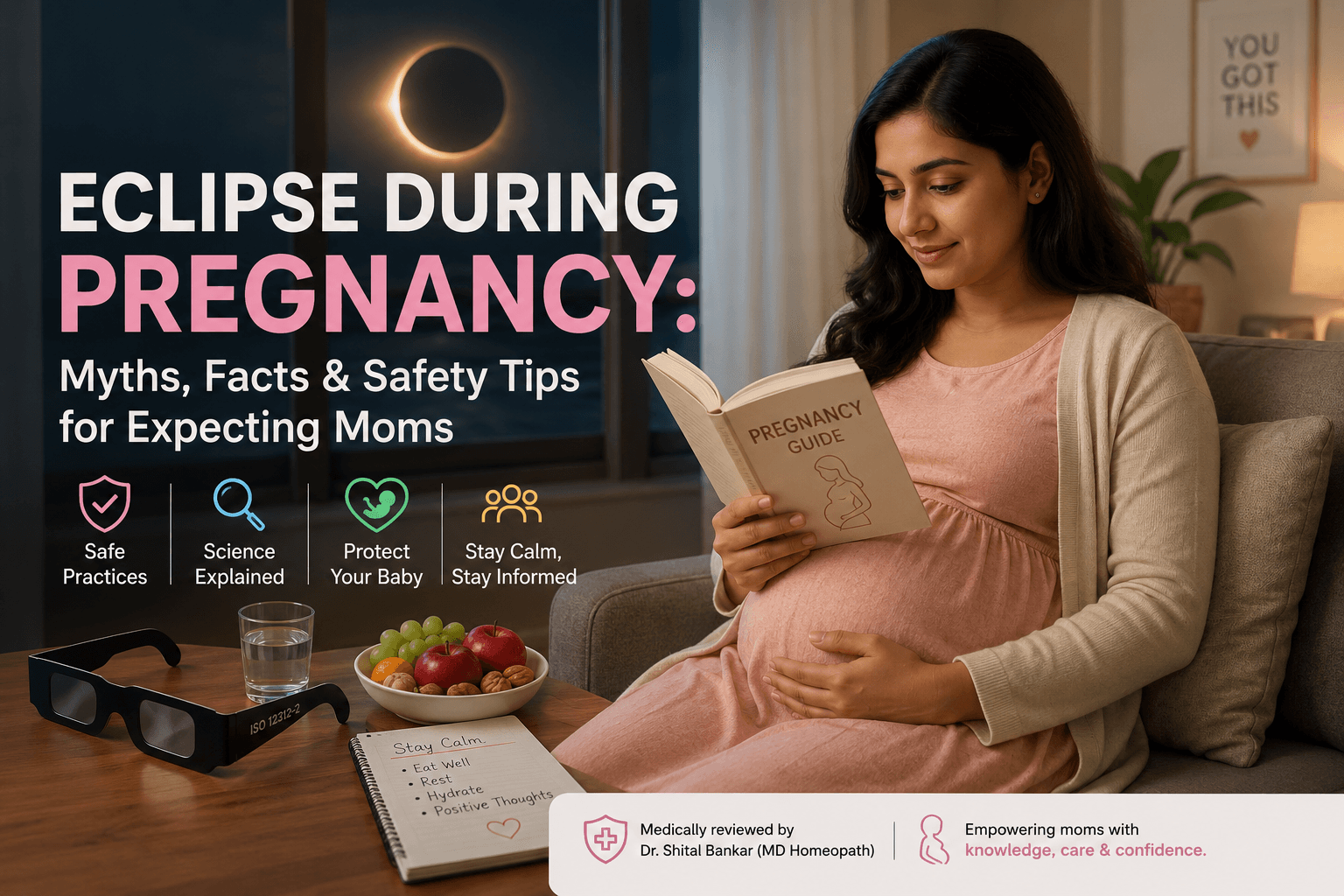
Is Eclipse During Pregnancy Safe?
Yes. Available medical evidence shows that a solar eclipse or lunar eclipse (Chandra Grahan) does not harm pregnancy or fetal development, and there is no evidence that eclipses increase the risk of pregnancy complications. The only proven health risk associated with a solar eclipse is looking directly at the sun without certified eye protection, which can cause permanent eye damage.
Pregnant women can safely continue their normal daily activities—including eating, sleeping, resting, going outside, and following their usual routine—during both solar and lunar eclipses.
If you have a high-risk pregnancy or any specific medical concerns, continue following the advice of your obstetrician or healthcare provider, regardless of whether an eclipse is occurring.
Table of Contents
- Is Eclipse During Pregnancy Safe?
- Why Are Eclipses Linked to Pregnancy Myths?
- Scientific Perspective: Are Solar or Lunar Eclipses Harmful?
- Is It Safe to Go Outside?
- Myths vs Facts Table
- Precautions During Solar & Lunar Eclipse in Pregnancy
- Do’s & Don’ts
- Cultural Beliefs
- Family Support Advice
- FAQs
- How Dr. Shital Supports Pregnancy Wellness
- Final Thoughts
Here’s a quick summary before we explore the science, common myths, and practical safety advice in detail.
Key Takeaways
- Current medical evidence shows that solar and lunar eclipses do not harm pregnancy or fetal development.
- The only proven risk is looking directly at the sun during a solar eclipse without certified eye protection.
- Beliefs such as avoiding food or sharp objects during an eclipse are cultural traditions, not evidence-based medical recommendations.
- Pregnant women can safely continue their normal routine, including eating, resting, sleeping, and going outside during an eclipse.
- Staying calm, well-nourished, and following your doctor’s advice is more important than fear or myths surrounding an eclipse.
Why Are Eclipses Linked to Pregnancy Myths?
Across Indian households and many cultures, eclipses are treated as powerful cosmic events. For generations, pregnant women were told to stay indoors, avoid eating, avoid using sharp objects, and follow certain rituals — all meant to “protect mother and baby.”
When we talk about eclipse and pregnancy in Indian homes, we are really talking about traditions passed down over time. These are cultural practices, not medical rules. Modern science helps clarify which beliefs matter and which do not.
Scientific Perspective: Are Solar or Lunar Eclipses (Chandra Grahan) Harmful During Pregnancy?
Eclipses are natural astronomical alignments between the Earth, Moon, and Sun. They do not alter human biology, hormones, or fetal development in any measurable way.
Modern medical evidence shows that solar and lunar eclipses do not harm pregnancy or fetal development. They do not expose the fetus to harmful radiation or any known physical effects that increase the risk of pregnancy complications.
The only proven health risk associated with a solar eclipse is looking directly at the sun without certified eclipse glasses or other safe solar viewing methods. This can cause permanent eye damage and applies to everyone—not just pregnant women. It is an eye safety issue, not a pregnancy-related risk. For safe solar eclipse viewing recommendations, refer to the American Academy of Ophthalmology.
Current medical evidence does not identify solar or lunar eclipses as a risk factor for pregnancy complications.
Emotional sensitivity often increases during pregnancy due to hormonal shifts and a heightened protective instinct toward the baby. Hearing strong cultural warnings during an eclipse may naturally heighten anxiety — even though there is no medical danger. Staying calm, informed, and reassured supports both emotional stability and physical well-being during this important phase.
What Is a Lunar Eclipse (Chandra Grahan)?
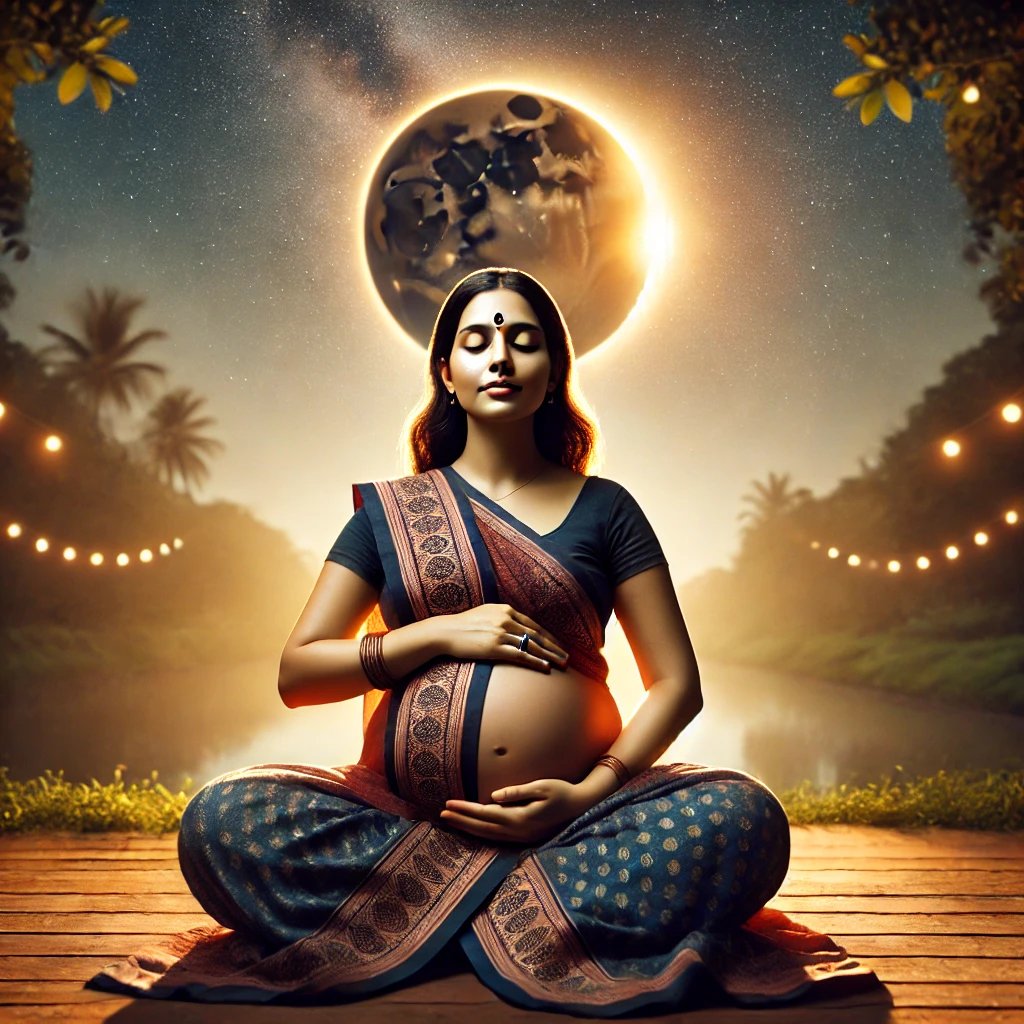
A lunar eclipse occurs when the Earth comes between the Sun and the Moon, casting a shadow on the Moon. It happens at night during a full moon and is completely safe to observe with the naked eye.
Unlike a solar eclipse, a lunar eclipse does not involve direct sunlight exposure and does not emit harmful rays or radiation. There is no scientific evidence linking Chandra Grahan to pregnancy complications.
If you’re feeling anxious during pregnancy and looking for structured support, our doctor-guided Live Online Pregnancy Yoga Classes help expecting mothers stay calm, build confidence, stay physically active, and prepare safely for childbirth—from the comfort of home.
Is It Safe to Go Outside During an Eclipse While Pregnant?
Yes — it is completely safe to step outside during a solar or lunar eclipse while pregnant. There is no medical restriction on being outdoors, and an eclipse does not harm your baby.
The only precaution applies to eye safety during a solar eclipse, which affects everyone — not just pregnant women.
- Avoid looking directly at the sun without certified eclipse glasses.
- Stay hydrated and avoid excessive heat or crowded areas.
- If staying indoors feels more comfortable emotionally, that is perfectly fine too.
Pregnancy Myths vs Facts About Eclipses
| Myth | Fact |
|---|---|
| Eclipse rays cause birth defects | No scientific evidence supports this. |
| Pregnant women must fast | Fasting is unsafe; nutrition is essential. |
| Food becomes unsafe during eclipse | Food is not affected — medically or scientifically. |
| Using knives harms the baby | No medical basis — purely cultural. |
| Sleeping during eclipse is unsafe | Sleeping or resting is completely safe. |
Precautions During Solar & Lunar Eclipse in Pregnancy
There are no special medical precautions required during a solar or lunar eclipse while pregnant. However, following a few simple comfort and eye-safety measures can help you stay relaxed and confident.
- Before the Eclipse: Continue eating normally, stay well hydrated, prepare meals in advance if it gives you peace of mind, and take time to rest.
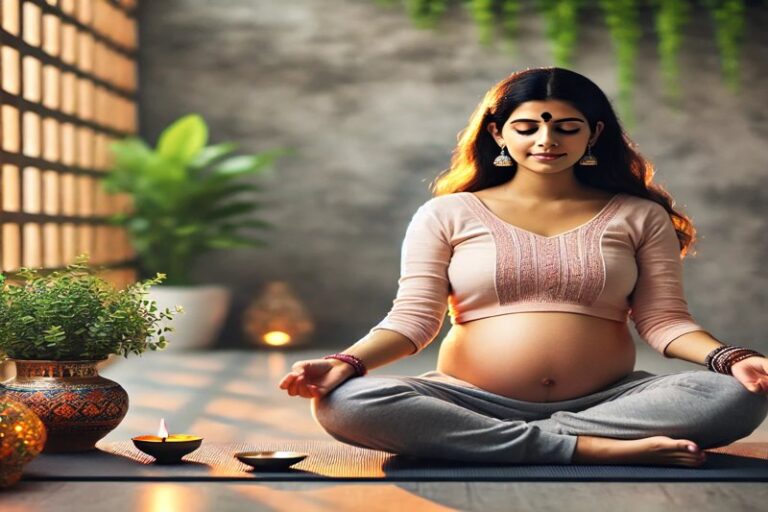
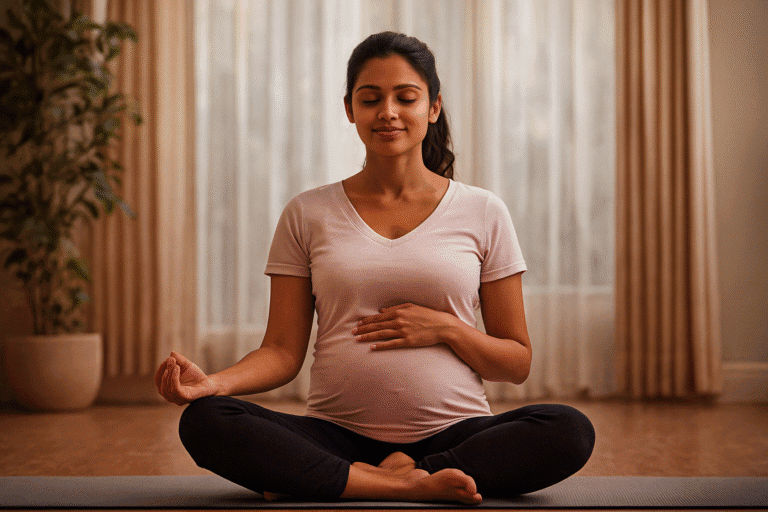
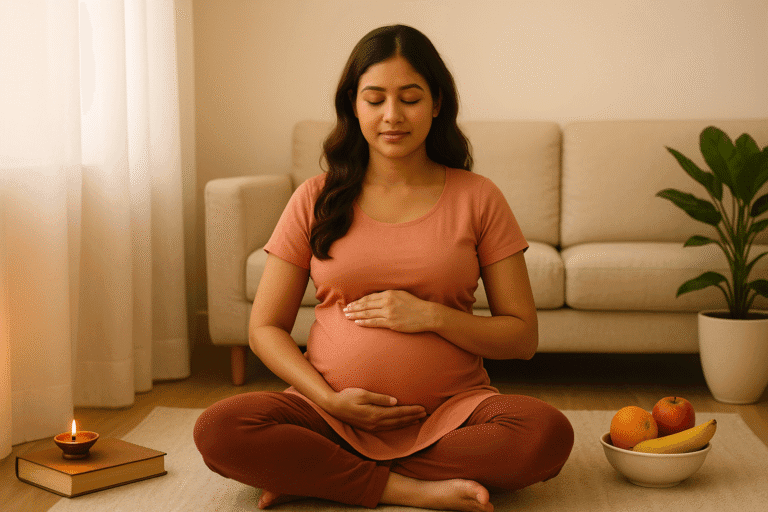
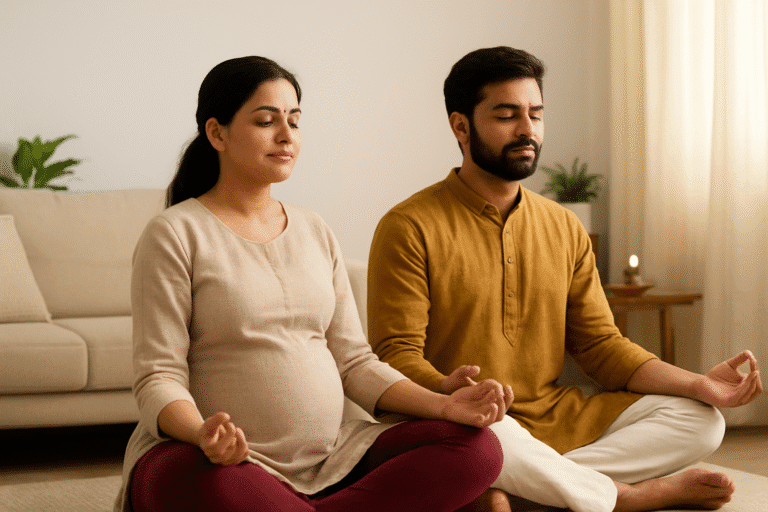
- During the Eclipse: Avoid looking directly at the sun during a solar eclipse without certified eclipse glasses. You can safely continue your normal routine, including eating, resting, or sleeping. Practice deep breathing or meditation if it helps you feel calm.
- After the Eclipse: Resume your regular activities, eat nutritious meals, drink plenty of water, and continue enjoying a healthy pregnancy.
Do’s & Don’ts During an Eclipse in Pregnancy
If you’re wondering what to do during an eclipse while pregnant, keep it simple. There is no medical danger — just follow basic comfort and eye safety precautions.
✅ Do’s
- Stay hydrated and drink water regularly.
- Eat balanced meals — your baby needs nutrition.
- Rest or sleep if you feel tired.
- Practice deep breathing or meditation to stay calm.
- Use certified eclipse glasses if viewing a solar eclipse.
❌ Don’ts
- Don’t look directly at the sun without protection.
- Don’t skip meals or fast unless medically advised.
- Don’t let fear or myths replace evidence-based medical advice.
- Don’t let anxiety disturb your emotional well-being.
Remember, during pregnancy your emotional health matters more than any cultural ritual. Staying relaxed and informed is the safest approach.
Cultural Beliefs — Balanced Approach
Cultural traditions around eclipse and pregnancy can be meaningful for families and are often passed down with good intentions. You may choose to follow rituals like staying indoors or lighting a diya if they give you peace and emotional comfort, as long as they don’t compromise your nutrition, hydration, or mental well-being.
Respecting traditions is a personal choice, but medical decisions during pregnancy should always be guided by evidence-based advice rather than fear.
Advice for Families Supporting Pregnant Women
- Reassure the mother instead of creating fear.
- Do not force stressful rituals.
- Help prepare meals and create a calm environment.
- Encourage emotional well-being.
FAQs on Eclipse During Pregnancy
Can pregnant women go outside during an eclipse?
Yes. Current medical evidence shows that pregnant women can safely go outside during both solar and lunar eclipses. The only precaution is to avoid looking directly at the sun during a solar eclipse without certified eclipse glasses.
Can an eclipse cause birth defects?
No. Current medical evidence does not link solar or lunar eclipses with birth defects or fetal abnormalities.
Is solar eclipse harmful for pregnant women?
No. A solar eclipse does not harm pregnancy. The only proven health risk is looking directly at the sun without certified eye protection, which can cause permanent eye damage.
Can pregnant women eat during an eclipse?
Yes. Pregnant women should continue eating normally during an eclipse. Fasting during pregnancy is not medically recommended unless advised by a healthcare professional.
Is it safe to sleep during an eclipse while pregnant?
Yes. Sleeping or resting during an eclipse is completely safe for pregnant women.
Does WHO say eclipse is harmful during pregnancy?
No. There are no World Health Organization (WHO) guidelines stating that solar or lunar eclipses harm pregnancy. Current medical evidence does not identify eclipses as a risk factor for pregnancy complications.
Are lunar eclipses dangerous during pregnancy?
No. Lunar eclipses (Chandra Grahan) are safe to watch with the naked eye and have no effect on pregnancy or fetal development.
While eclipses are medically safe, many expecting mothers still appreciate guidance and reassurance throughout pregnancy. You can explore our Online Pregnancy Yoga Classes or Online Garbh Sanskar Classes for doctor-led guidance, trimester-safe exercises, and emotional well-being — from the comfort of your home.
How Dr. Shital Bankar Supports Pregnancy Wellness
Dr. Shital Bankar, MD (Homeopathy) is a Pregnancy Yoga & Garbh Sanskar Educator who combines evidence-based pregnancy guidance with the traditional principles of Garbh Sanskar to support expecting mothers physically, emotionally, and mentally throughout pregnancy. Her approach focuses on helping women stay informed, build confidence, and prepare for a healthy pregnancy, childbirth, and early motherhood.
If you’re looking for structured, trimester-safe guidance, explore our doctor-guided Pregnancy Yoga Classes in Pune, designed to improve flexibility, reduce stress, improve breathing techniques, and prepare you confidently for labour and childbirth.
To nurture a positive mindset and strengthen the emotional bond with your baby, learn more about our doctor-led Garbh Sanskar Classes in Pune, trusted by 1,000+ expecting mothers from India and around the world.
You can also learn more about Dr. Shital’s qualifications, experience, and approach to pregnancy wellness on the About Dr. Shital Bankar page.
Final Thoughts
Solar and lunar eclipses are natural celestial events. Current medical evidence shows that they do not cause birth defects, miscarriage, or harm to your baby. Most eclipse-related pregnancy precautions are based on cultural beliefs rather than scientific evidence.
If following a family tradition gives you emotional comfort and does not interfere with your nutrition, hydration, or medical care, it is perfectly reasonable to do so. At the same time, you can feel reassured knowing that current medical evidence does not identify eclipses as a risk factor for pregnancy complications.
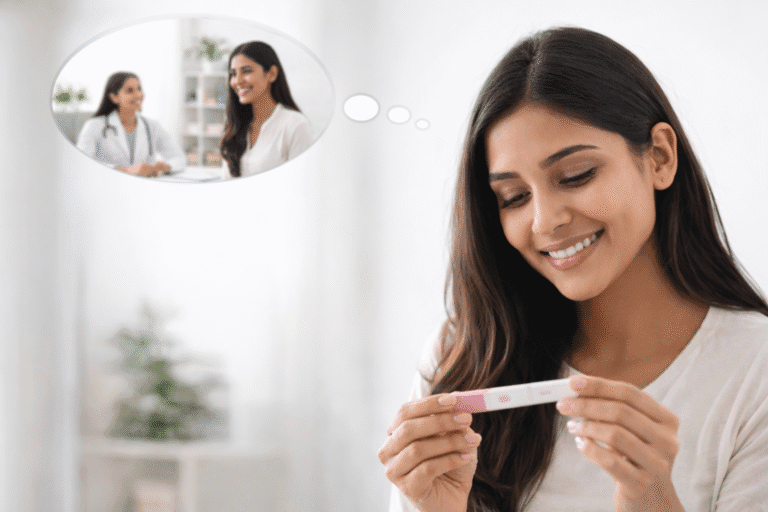
If you still have questions about eclipse during pregnancy or any other aspect of your pregnancy, speak with your obstetrician or healthcare provider. Evidence-based guidance and personalised medical advice will always help you make informed decisions with confidence.
You may also find these doctor-written pregnancy resources helpful:
- 10 Simple Ways to Do Garbh Sanskar at Home
- What to Do After a Positive Pregnancy Test
- Pregnancy Due Date Calculator
Need Personalised Pregnancy Guidance?
If you’re looking for doctor-guided support throughout pregnancy, explore Dr. Shital’s Online Garbh Sanskar Classes, Live Online Pregnancy Yoga Classes, and Pregnancy Yoga Classes in Pune. These programs are designed to support your physical, emotional, and mental well-being throughout pregnancy while helping you prepare confidently for childbirth.
📱 Message Dr. Shital on WhatsApp