
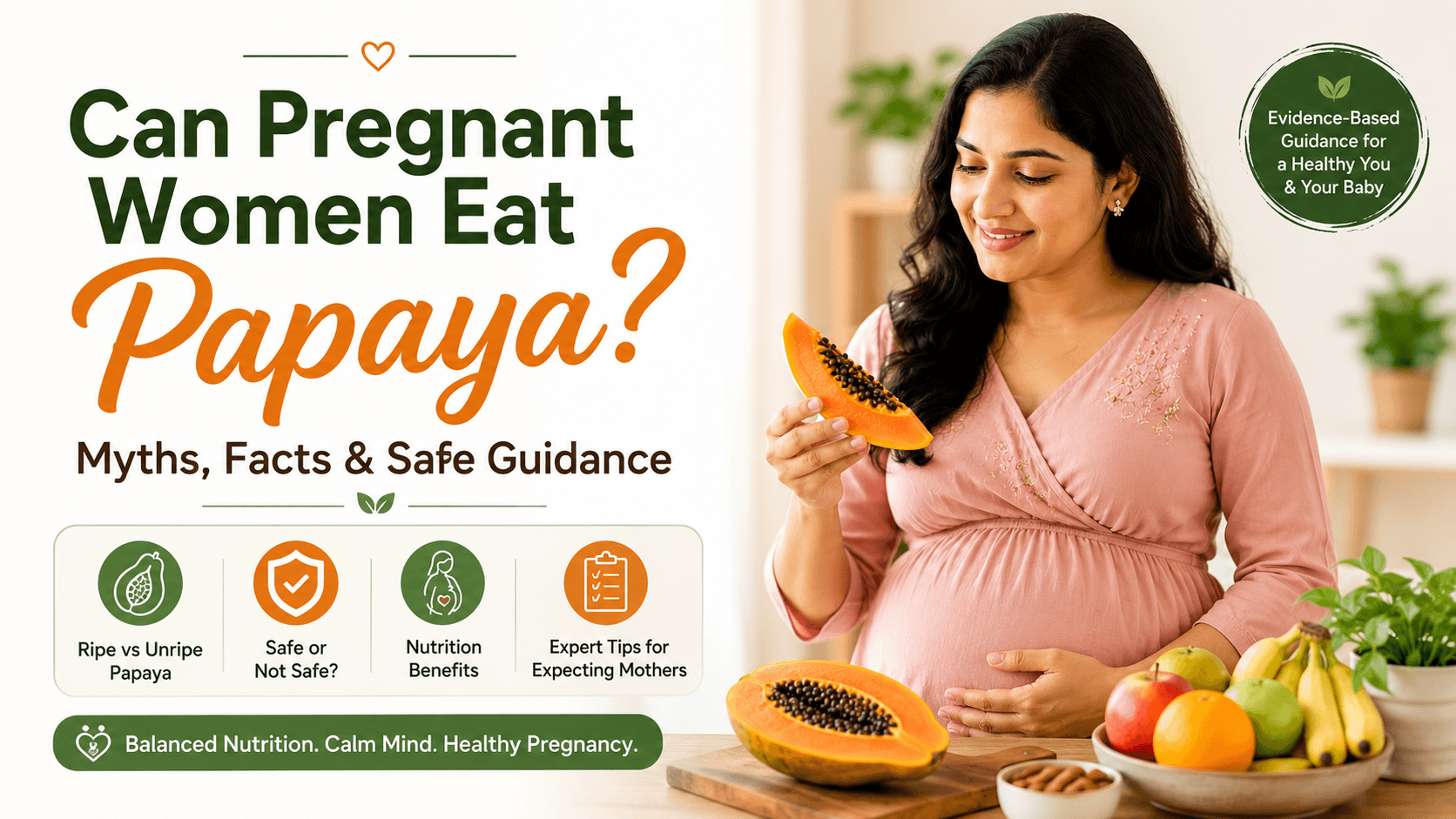
Can Pregnant Women Eat Papaya? Myths, Facts & Safe Guidance
Papaya during pregnancy is one of the most commonly discussed food concerns among expecting mothers in India.
Some people advise complete avoidance, while others say ripe papaya is harmless. Naturally, this confusion can create anxiety — especially for first-time mothers who simply want to do the best for their baby.
At Dr. Shital Bankar’s pregnancy wellness practice in Wakad, Pune, many mothers ask this question during Garbh Sanskar and Pregnancy Yoga sessions. The goal is not to create fear around food, but to help mothers make calm, informed, and balanced decisions during pregnancy.
In this article, we’ll understand the difference between ripe and unripe papaya, common pregnancy myths, practical nutrition guidance, and when extra caution may be needed.
Quick Answer
Fully ripe papaya may be safe in moderation for many healthy pregnancies. However, unripe or semi-ripe papaya is generally avoided because it contains higher amounts of latex, which may stimulate uterine contractions if consumed excessively.
Every pregnancy is unique. If you have a high-risk pregnancy or specific medical concerns, always follow your doctor’s guidance.
The Common Myth About Papaya During Pregnancy
In many Indian households, pregnant women are often told:
“Papaya should never be eaten during pregnancy.”
This advice usually comes from traditional caution regarding raw or unripe papaya. Over time, this became a generalized pregnancy myth that all forms of papaya are unsafe.
Naturally, such warnings can create fear and confusion for expecting mothers — especially during the early months of pregnancy when women are already emotionally sensitive and cautious about every food choice.
However, medically, there is an important difference between unripe papaya and fully ripe papaya.
“Papaya should never be eaten during pregnancy.”
The Important Difference: Ripe vs Unripe Papaya
The confusion around papaya during pregnancy usually happens because people do not differentiate between unripe papaya and fully ripe papaya.
Understanding this difference is important because their composition, traditional concerns, and pregnancy guidance are not the same.
Unripe or Semi-Ripe Papaya
Unripe papaya is usually green or partially yellow and firmer in texture.
It contains higher amounts of latex and is generally considered something to avoid during pregnancy, especially in large quantities or raw preparations.
Examples include:
• Raw papaya salad
• Semi-ripe papaya curry
• Green papaya dishes
• Papaya extracts or supplements
Because pregnancy is a sensitive phase, most doctors recommend extra caution with unripe papaya.
Fully Ripe Papaya
Fully ripe papaya is soft, orange or yellow in color, sweet in taste, and naturally lower in latex.
In moderate amounts, ripe papaya is generally considered safe for many pregnant women.
It also contains nutrients such as:
• Vitamin C
• Fiber
• Antioxidants
• Folate
• Water content for hydration
For some mothers, ripe papaya may support digestion and help with constipation during pregnancy.
The key is moderation and individualized medical guidance.
Can Pregnant Women Eat Ripe Papaya Safely?
For many healthy pregnancies, small to moderate amounts of fully ripe papaya may be acceptable.
However, every pregnancy is unique.
Women with high-risk pregnancy concerns, bleeding history, cervical complications, uterine sensitivity, or specific medical restrictions may require personalized dietary guidance.
That is why generalized fear is not helpful — but individualized medical care is important.
Trimester-Wise Guidance
Pregnancy nutrition needs may change across different stages of pregnancy. Many expecting mothers also become more cautious about food choices trimester by trimester.
Here is some calm and practical guidance regarding papaya during each stage of pregnancy.
First Trimester
The first trimester is emotionally sensitive for many mothers. During this phase, many families prefer avoiding papaya entirely for extra reassurance, especially unripe papaya.
Because early pregnancy is delicate, most doctors recommend avoiding unripe or semi-ripe papaya during this stage.
Some mothers may also choose to limit even ripe papaya for personal comfort and peace of mind. If you are uncertain, discussing your diet calmly with your doctor is always better than relying on fear-based internet information.
Second Trimester
By the second trimester, many women experience improved appetite and digestion.
If the pregnancy is healthy and your doctor has no dietary restrictions, moderate portions of fully ripe papaya may be acceptable for some women.
At this stage, hydration, digestion, emotional well-being, and nutrient-rich foods become increasingly important during pregnancy wellness.
Third Trimester
During the final trimester, constipation, acidity, bloating, and digestive discomfort can become more common.
Because ripe papaya contains fiber and water content, some mothers may tolerate it well in moderation.
Still, balance matters. No single fruit is considered a “magic food,” and pregnancy nutrition should remain varied, balanced, and individualized.
Practical Nutrition Guidance for Expecting Mothers
Instead of focusing only on “allowed” and “forbidden” foods, pregnancy nutrition works best when approached calmly and practically.
A healthy pregnancy diet is usually about balance, moderation, hydration, and individualized guidance rather than fear-based restrictions.
Choose Fresh & Balanced Foods
• Prefer fresh and hygienically prepared foods
• Choose fully ripe fruits whenever possible
• Include vegetables, proteins, iron-rich foods, calcium sources, and healthy hydration
• Avoid excessive consumption of any single food during pregnancy
• Maintain regular meal timing for better digestion and energy levels
Listen to Your Body & Seek Guidance
• Some women naturally tolerate foods differently during pregnancy
• Digestive comfort and emotional well-being both matter
• Avoid self-medicated herbal mixtures or concentrated supplements
• Discuss major diet concerns with your doctor instead of relying only on online myths
• Calm, informed decisions are usually better than fear-driven restrictions
Pregnancy Wellness Is More Than Just Food Restrictions
Healthy pregnancy care includes emotional balance, guided movement, proper breathing, mindful nutrition, rest, and positive support systems.
This is why many expecting mothers today explore holistic support through Garbh Sanskar practices, Pregnancy Yoga, prenatal relaxation techniques, and structured wellness guidance.
These approaches can help mothers feel more connected, calm, and supported during pregnancy.
Emotional Reassurance for First-Time Mothers
One of the hardest parts of pregnancy today is information overload.
A mother may hear:
- “Don’t eat papaya.”
- “Don’t travel.”
- “Don’t exercise.”
- “Don’t exercise.”
- “Don’t bend.”
- “Don’t walk too much.”
While some precautions are important, constant fear and conflicting advice can create unnecessary anxiety during pregnancy.
A Calm & Balanced Pregnancy Journey Matters Too
Pregnancy wellness is not only physical — it is emotional too.
At Dr. Shital Bankar’s prenatal wellness sessions, expecting mothers are encouraged to:
• ask questions openly
• avoid panic-based internet searching
• focus on calm routines
• build confidence in their body’s journey
• seek balanced medical guidance instead of fear-driven advice
A peaceful and informed mother usually makes better decisions than an anxious one surrounded by conflicting information.
Supportive Pregnancy Wellness Can Make a Difference
Many expecting mothers today look for structured emotional and wellness support during pregnancy through practices such as Pregnancy Yoga, Garbh Sanskar, breathing exercises, relaxation techniques, and guided prenatal wellness sessions.
These approaches can help mothers feel calmer, emotionally connected, and more confident throughout their pregnancy journey.
Frequently Asked Questions
Here are answers to some common questions expecting mothers often ask about papaya during pregnancy.
Need Calm & Supportive Pregnancy Wellness Guidance?
Pregnancy is not just about avoiding risks — it is also about creating a healthy, emotionally positive environment for both mother and baby.
At Dr. Shital’s Garbh Sanskar & Pregnancy Wellness practice in Wakad, Pune, and through online prenatal wellness support, expecting mothers receive guidance through:
✓ Pregnancy Yoga Classes
✓ Garbh Sanskar Sessions
✓ Emotional Wellness Support
✓ Relaxation & Breathing Practices
✓ Online Prenatal Wellness Guidance
The goal is to help mothers feel calm, confident, informed, and supported throughout their pregnancy journey.